Neck pain is common, especially with desk work, driving and long stretches on a phone. Most episodes settle well, and the everyday habits around them matter more than most people realise.
Three simple things worth doing
- Move through the day. Set a reminder to change position every 30–40 minutes. A 30-second reset — gently looking left and right, bringing the chin back, rolling the shoulders — keeps the neck from stiffening in one position.
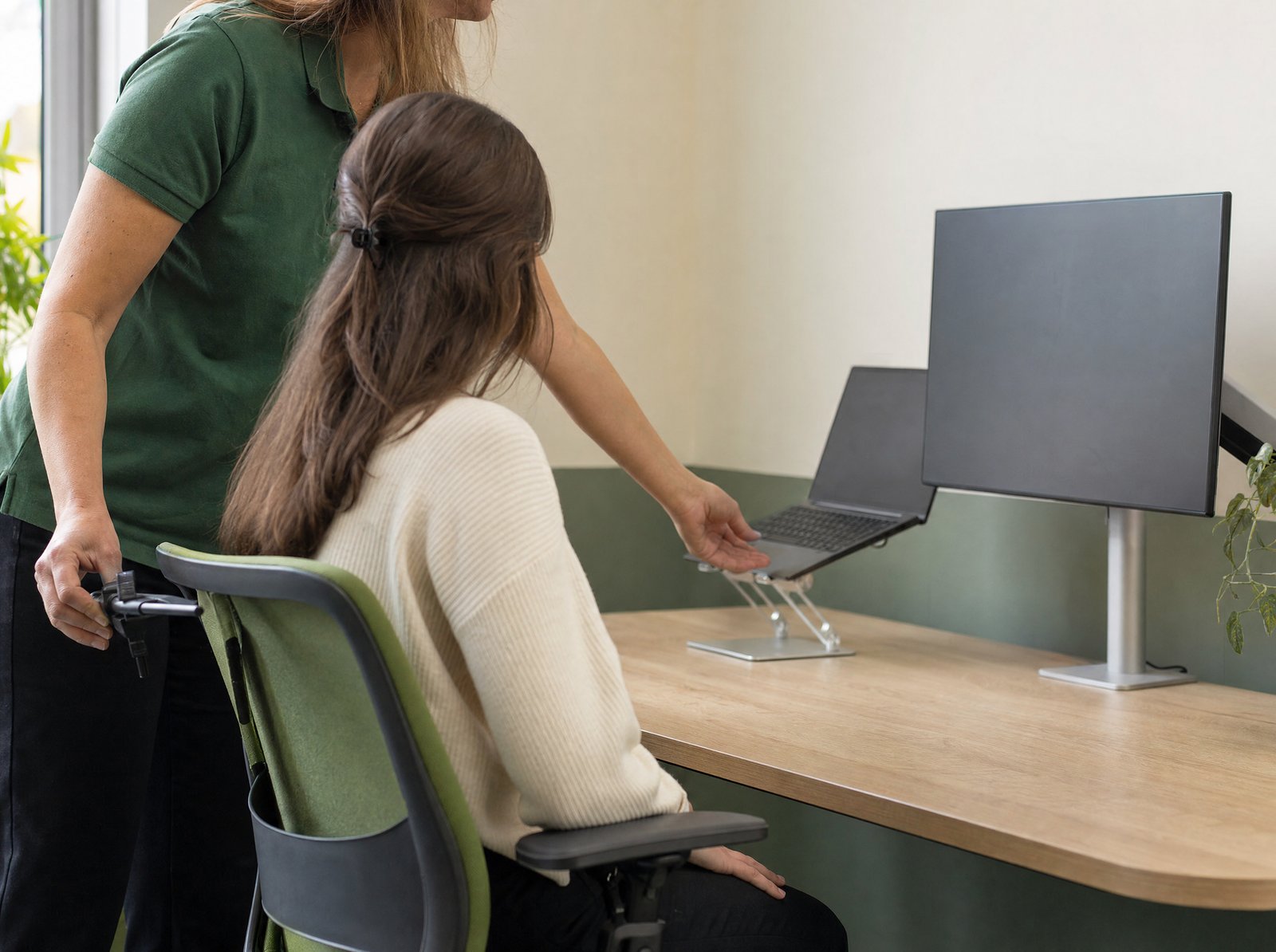
- Check your screen height. The top of the screen should sit near eye level so you are not looking down for hours. Laptops usually need a stand or books under them.
- Be kind to your pillow. Your head should rest in a neutral position in side-sleeping, neither cranked up nor dropping away from the spine. There is no one 'right' pillow — comfort and neutral alignment guide the choice.
Why movement is the big one
The neck is designed to move constantly. When we hold one position — often slightly forward and down — the muscles at the base of the skull and up into the shoulders work overtime. Regular, comfortable movement is the most effective daily habit for most stiff necks.
What about headaches?
Neck-related (cervicogenic) headaches often start at the back of the head and travel forward. If your headache pattern is new, severe, or accompanied by visual changes, fever or vomiting, get medical advice promptly.
When to book an assessment
- Pain is not settling after a couple of weeks
- It radiates into the arm, with tingling, numbness or weakness
- Headaches are becoming frequent and you suspect your neck is driving them
- You have had a whiplash-type injury (e.g., a car accident or fall)
Key takeaways
- Little and often beats heroic stretches once a day
- Screen height, position changes and pillow neutrality are the cheap wins
- New or severe headache patterns need medical review
- Persistent or radiating neck pain deserves an assessment, not another month of guessing
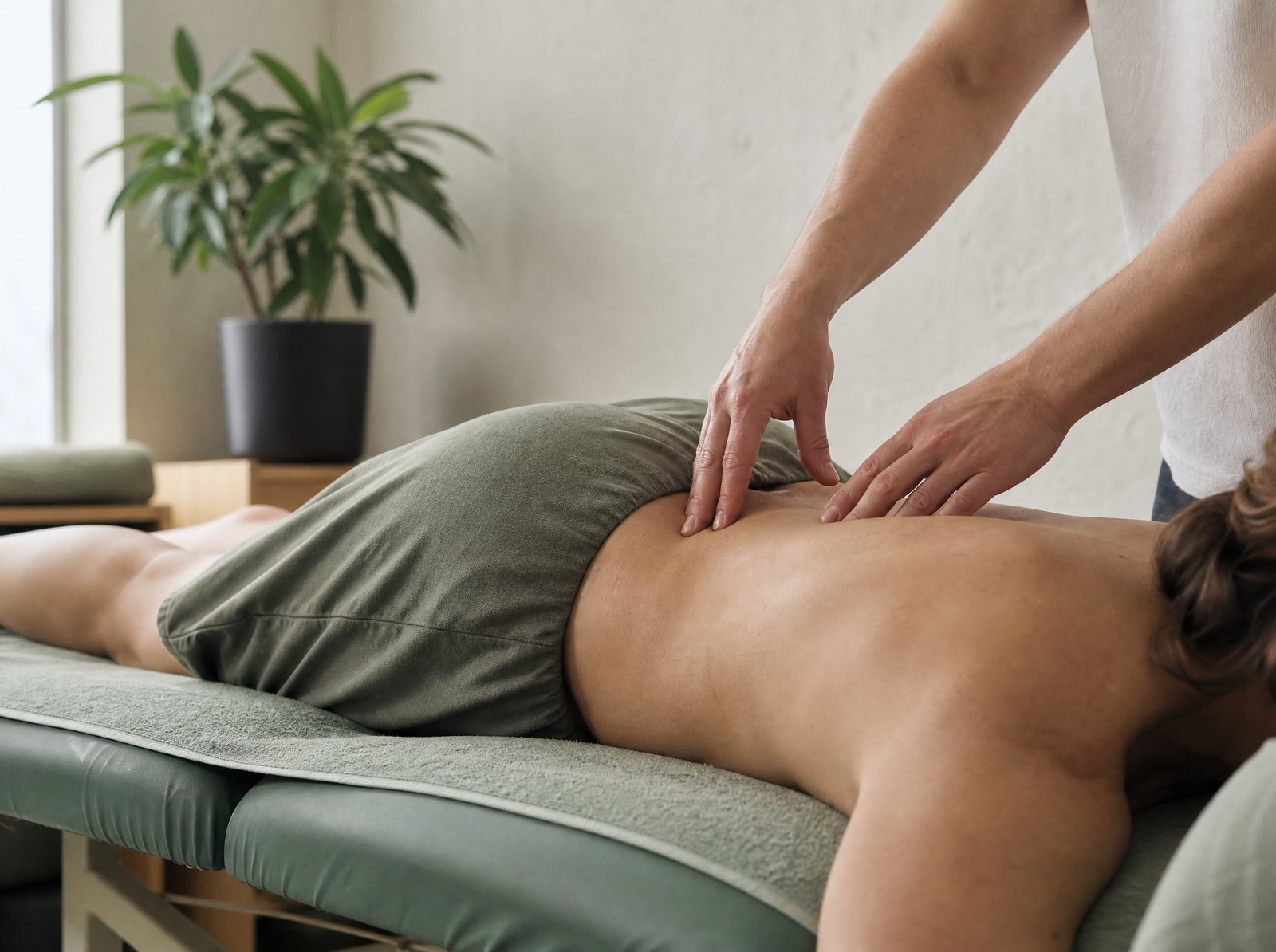
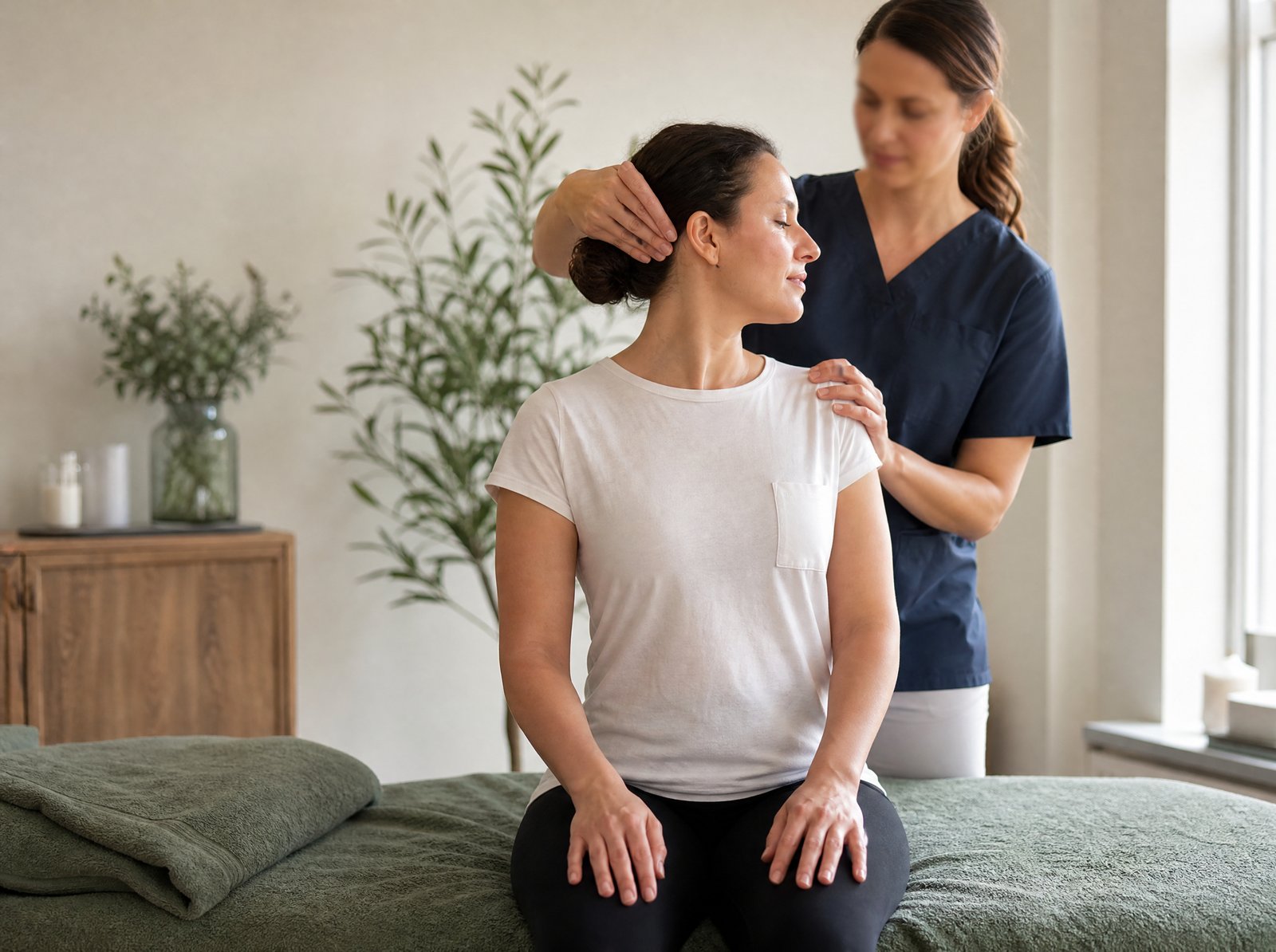
Related treatment: Spinal physiotherapy — book an assessment
This article is general information and is not a substitute for an individual assessment. If you are unsure about your symptoms, or they are not settling, book an appointment or call 087 962 7573.